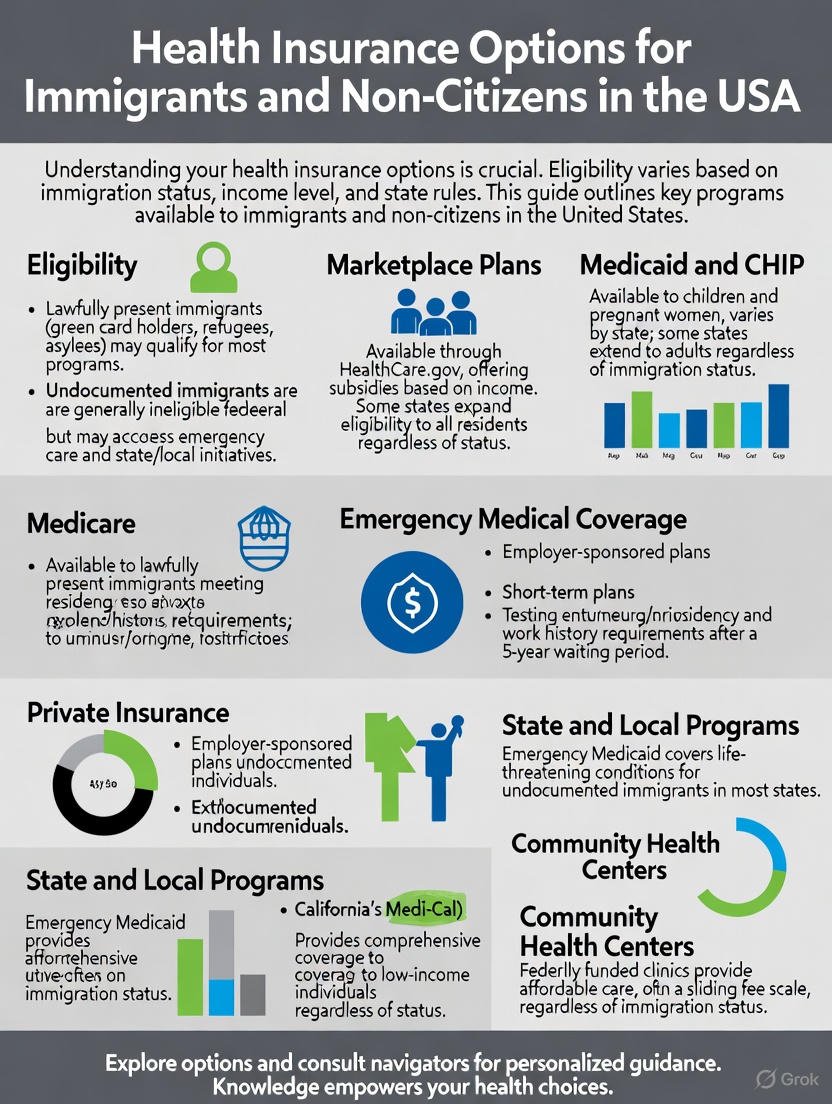
Health insurance in the United States can be confusing for immigrants and non-citizens because eligibility depends on immigration status, income level, and state rules. While not everyone qualifies for government programs, there are still several health insurance options available. This updated guide explains who can get coverage, what types of plans exist, and how immigrants and non-citizens can access healthcare in the USA.
Understanding Immigration Status and Health Insurance
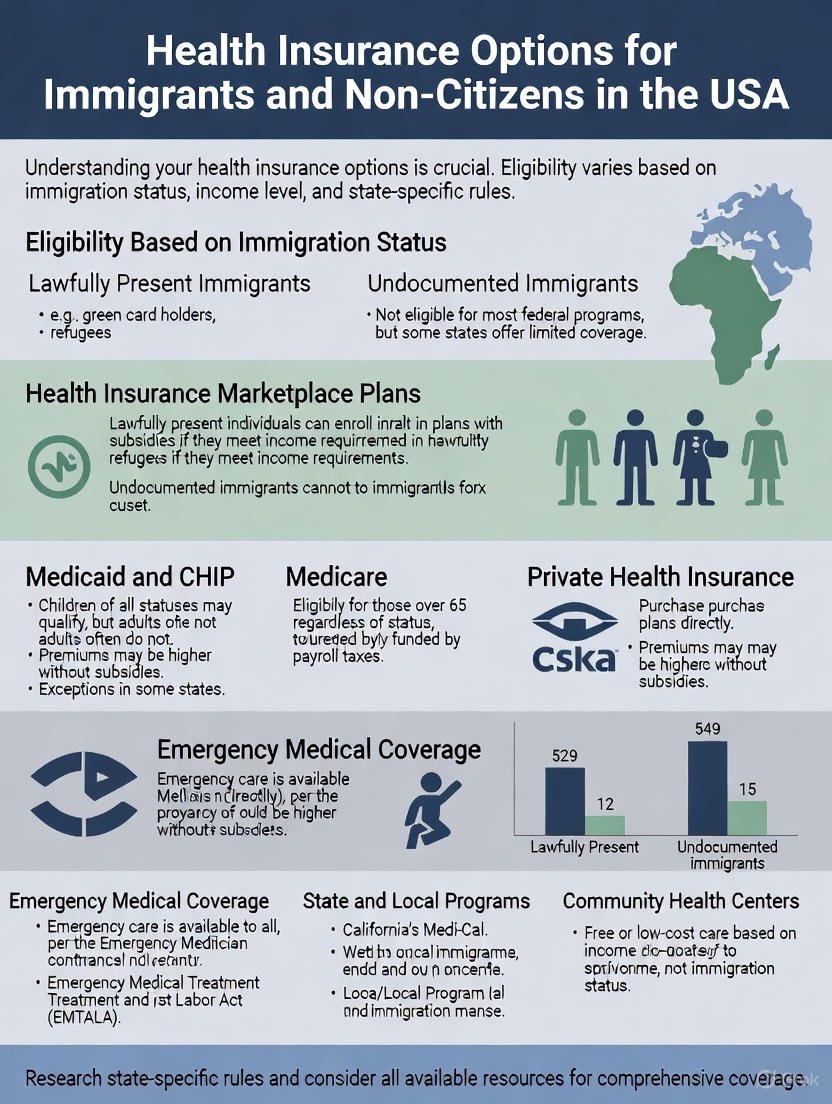
Health insurance eligibility in the USA is closely tied to immigration status. The system generally divides immigrants into two main groups: lawfully present immigrants and undocumented immigrants. Each group has different access to insurance options.
Health Insurance for Lawfully Present Immigrants
Who Is Considered Lawfully Present
Lawfully present immigrants include green card holders, refugees, asylees, people with valid work visas, student visas, temporary protected status, and certain humanitarian categories. Many of these individuals are eligible for health insurance options similar to U.S. citizens.
Marketplace Health Insurance Plans
Lawfully present immigrants can buy health insurance through the health insurance marketplace. These plans cover essential health services such as doctor visits, hospital care, preventive services, prescription drugs, maternity care, and mental health services.
Income-based financial assistance may be available, which can lower monthly premiums and reduce out-of-pocket costs. Eligibility for assistance depends on household income and family size.
Medicaid and CHIP for Immigrants
Some lawfully present immigrants may qualify for Medicaid or the Children’s Health Insurance Program if they meet income and residency requirements. In many cases, there is a waiting period before full Medicaid coverage begins, although refugees, asylees, and certain other groups may be exempt.
Children and pregnant individuals often have broader eligibility, and some states provide coverage without waiting periods.
Medicare Eligibility
Non-citizens may qualify for Medicare if they are lawfully present, have lived in the USA for a required number of years, and have paid into the Social Security system through work. Medicare eligibility rules for non-citizens are similar to those for citizens.
Health Insurance for Undocumented Immigrants
Federal Program Limitations
Undocumented immigrants are generally not eligible for federal health insurance programs such as marketplace plans, Medicaid, CHIP, or Medicare. However, this does not mean healthcare access is completely unavailable.
Private Health Insurance Options
Undocumented immigrants can purchase private health insurance directly from insurance companies. These plans are not subsidized and may cost more, but they provide access to doctors, hospitals, and medical services.
Coverage options vary by insurer and state, so reviewing plan details carefully is important.
Emergency Medical Coverage
Emergency medical care is available to everyone in the USA regardless of immigration status. Hospitals are required to provide emergency treatment. In some cases, emergency Medicaid may cover the cost of life-threatening emergency services.
State and Local Health Programs
Some states and local governments offer health coverage programs for immigrants, including undocumented residents. These programs may provide full coverage or limited services such as primary care, preventive care, or maternity services.
Eligibility rules, benefits, and availability vary widely by state and city. These programs are often designed to expand access to healthcare for vulnerable populations.
Community Health Centers and Clinics
Community health centers play a major role in providing care to immigrants and non-citizens. These centers offer medical services on a sliding fee scale based on income and do not require proof of insurance or immigration status.
Services often include primary care, preventive services, vaccinations, women’s health, mental health support, and basic prescriptions.
Mixed-Status Families
In families where some members are citizens or lawfully present and others are not, each person’s eligibility is evaluated separately. Eligible children or family members can still receive coverage even if other household members do not qualify.
Applying for coverage for eligible family members does not negatively affect the immigration status of other household members.
Enrollment Periods and Application Tips
Marketplace health insurance plans are typically available during open enrollment periods, but special enrollment may be possible after qualifying life events such as loss of coverage, marriage, or birth of a child.
Medicaid and CHIP applications are usually accepted year-round. Providing accurate income and household information helps ensure correct eligibility decisions.
Choosing the Right Health Insurance Option
The best health insurance option depends on immigration status, income, family size, and healthcare needs. Lawfully present immigrants should explore marketplace plans and public programs first, as these often offer comprehensive coverage with financial assistance.
Undocumented immigrants may rely on private insurance, state programs, or community health centers to meet their healthcare needs.
Final Thoughts
Health insurance options for immigrants and non-citizens in the USA vary based on legal status and state policies. While access may be limited for some, there are still ways to receive medical care and protect against high healthcare costs.