Being labeled a high‑risk driver can make car insurance more expensive, but it does not mean you have to overpay forever. High‑risk drivers can still find affordable insurance by understanding how rates are calculated, knowing where to look for discounts, and comparing multiple companies. This guide explains what makes a driver high risk, how insurers calculate rates, and practical ways to find the lowest possible premiums in 2026.
Who Are High‑Risk Drivers?
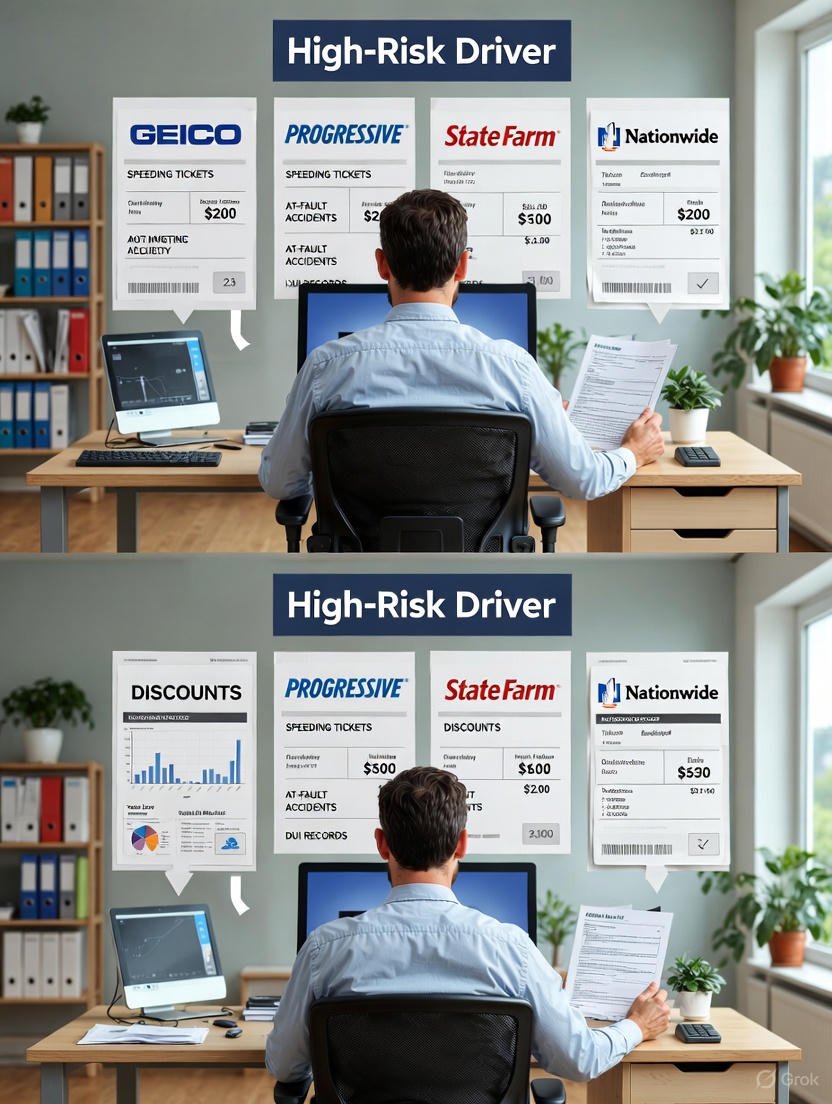
You may be considered a high‑risk driver if you have any of the following in your driving record:
Traffic violations such as speeding, reckless driving, or running red lights
At‑fault accidents
DUI, DWI, or driving with a suspended license
Multiple claims within a short period
A history of uninsured driving
A lapse in insurance coverage
These factors signal to insurers that you are more likely to file claims, and they respond by charging higher premiums.
How High‑Risk Status Affects Insurance Rates
Car insurance companies use risk assessments to price your policy. High‑risk drivers usually face:
Higher base premiums
Fewer discount opportunities
Limited access to top pricing tiers
Short‑term or nonstandard policies
That means the key to lower costs is improving risk profile where possible and choosing insurers known to handle high‑risk drivers competitively.
Basic Coverage Requirements by State
In most states you must carry at least minimum liability coverage, which pays for property damage and injuries you cause to others. Required minimums differ by state.
High‑risk drivers often face pressure to carry higher coverage limits to compensate for risk, but you can still shop around for affordable plans.
Best Low‑Cost Options for High‑Risk Drivers
Here are companies and strategies that often offer lower rates or better options for high‑risk drivers:
GEICO
GEICO is known for competitive pricing even for drivers with tickets or accidents. The company offers multiple discounts and usage‑based programs that may reduce rates if you drive safely.
Progressive
Progressive uses programs like Snapshot, which tracks driving habits. High‑risk drivers who show improvement can earn lower premiums over time. Progressive also offers many discount options.
State Farm
State Farm provides personalized service through agents who can help find discounts and tailor coverage for high‑risk profiles. Good driver and defensive driving discounts may apply after violations age out.
Nationwide
Nationwide offers various discounts, and its claims service often appeals to drivers who want direct support. Rates may be competitive even for higher‑risk applicants.
Smaller Regional Insurers
In many states, smaller or regional companies often provide more flexible pricing for nonstandard drivers. These carriers may be worth exploring along with national brands.
Discounts That Can Lower Rates for High‑Risk Drivers
Even high‑risk drivers can qualify for discounts if they meet certain conditions:
Safe driver discount after a clean period
Defensive driving course discount
Multi‑policy discount (car + home/renters)
Paid‑in‑full or automatic payment discount
Low mileage discount
Good student discount (for younger drivers)
Always ask insurers which discounts you qualify for, as they vary by company.
Usage‑Based Insurance Programs
Usage‑based insurance (UBI) or telematics programs can be valuable for high‑risk drivers. These programs track your actual driving behavior through an app or device and may reward safer driving with lower premiums.
Common factors monitored include:
Mileage
Speeding events
Hard braking
Time of day driven
If your driving performance improves, you may see rate reductions over time.
Defensive Driving Courses
Completing an approved defensive driving course is one of the most reliable ways to reduce your insurance premium after violations. Most insurers accept certificates from state or insurer‑approved courses and apply discounts once your course is submitted.

Choosing Coverage Levels Wisely
High‑risk drivers must still meet state minimums, but you can adjust coverage to balance cost and protection:
Higher deductibles lower monthly premiums but increase out‑of‑pocket costs if you file a claim.
Liability‑only coverage is usually cheapest, but it offers less protection than full coverage.
Uninsured/underinsured motorist coverage protects you if the at‑fault driver lacks insurance.
Medical payments or personal injury protection helps with medical costs after an accident.
Choosing deductibles and limits according to your budget helps control costs.
Improve Your Risk Profile Over Time
Insurance companies reward improved driving history. Ways to improve your profile include:
Staying violation‑free for years
Taking defensive driving or safe driving courses
Maintaining continuous insurance coverage
Using telematics programs to show safe driving
As negative marks age out, your rates may decrease.
How to Compare Quotes Effectively
To find the lowest rates:
Get quotes from at least five insurers
Use the same coverage levels and deductibles for apples‑to‑apples comparison
Ask about special programs for high‑risk drivers
Check discounts and eligibility criteria
Review customer service and claims handling ratings
Comparing quotes regularly ensures you are not overpaying.
Common Mistakes High‑Risk Drivers Make
Choosing the cheapest policy without checking coverage adequacy
Not asking about available discounts
Letting insurance lapse between policies
Failing to compare multiple carriers before renewing
Avoiding these mistakes helps you find reliable and affordable insurance.
Final Thoughts
Being a high‑risk driver does not mean you must pay the highest rates forever. By understanding what affects your premium, choosing the right insurer, using discounts, and demonstrating safer driving over time, you can find affordable car insurance in the USA in 2026.
Focus on comparison shopping, defensive driving, usage‑based programs, and maintaining a clean record. With patience and strategy, even high‑risk drivers can save on car insurance premiums while staying protected on the road.